
Powered By



You may have heard that relapsed and refractory multiple myeloma (RRMM) is challenging to treat. However, newer, highly effective treatments such as immunotherapy are helping more people live longer with better quality of life.
Immunotherapy offers a promising category of treatment options for those with RRMM. It harnesses the power of your immune system to better fight myeloma. Your immunotherapy options may include chimeric antigen receptor (CAR) T-cell therapy, bispecific antibodies, and antibody-drug conjugates (ADCs).
Before beginning a new treatment plan, it’s important to understand how it could affect you. In this article, we’ll cover helpful questions to ask your oncologist about immunotherapy, including how and when you’ll take it, how effective it is, and any side effects to expect.
Sign up to view the results!
 Continue with Facebook
Continue with Email
Your myeloma specialist can help you understand why they’re recommending a particular immunotherapy at this point in your treatment.
Immunotherapy can be an effective treatment for RRMM because it boosts the immune system’s response, helping it to identify and destroy cancer cells. Immunotherapy may be given in combination with other types of therapy.
Because myeloma cells develop from your plasma cells, it can be difficult for the immune system to recognize them as harmful invaders. RRMM cells are able to disguise themselves to appear as normal cells, allowing them to grow and spread without the immune system detecting them.
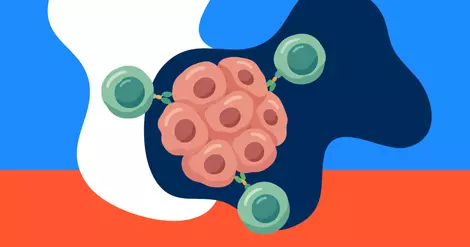
In general, immunotherapy works to treat RRMM by getting your immune cells to more effectively recognize and attack myeloma. Each type of immunotherapy works in a different way.
Types of immunotherapy approved by the U.S. Food and Drug Administration (FDA) include:
Different types of immunotherapy are administered in different ways and on different schedules. As a general guide, here is how they’re given:
Immunotherapy has shown promising results for people with RRMM. Even if your first round of immunotherapy isn’t successful, it may be possible to try a different type to target different proteins on the cancer cells.
Your myeloma specialist can provide details about how effective a specific type of immunotherapy has been for cases like yours.
Bispecific antibodies are a promising new treatment option for RRMM. A 2023 meta-analysis reported that certain bispecific antibodies have been found to be an effective treatment option for people with RRMM. Studies have also found that side effects can be well managed.
CAR T-cell therapy has high response rates for myeloma. Clinical trials have found that most people with RRMM who receive CAR T-cell therapy respond to treatment.
In a study, treatment with the ADC belantamab mafodotin increased people’s chances of being disease-free compared with traditional treatment.
Like any medical treatment, immunotherapy may cause side effects. Potential side effects are different with each type of immunotherapy, and not everyone will experience all (or even most) side effects.
In general, common side effects of immunotherapy for multiple myeloma may include:
Because some potential adverse effects can be severe, you may need to be closely monitored in a treatment facility for a few days after your treatment. Using step-up dosing can help lower the risk for some of these.
More severe potential side effects include cytokine release syndrome (CRS) and immune effector cell-associated neurotoxicity syndrome (ICANS).
CRS is a serious adverse effect that can develop while taking bispecific antibodies and CAR T-cell therapy. It’s a systemic response that happens when a large number of cytokines are rapidly released into the bloodstream. Cytokines are signaling proteins that usually regulate the body’s immune response.
Possible symptoms of CRS include chills, dizziness, fever, headache, nausea, rapid heart rate, and low blood pressure. CRS requires immediate treatment with supportive therapy.
Bispecific antibodies and CAR T-cell therapy can also cause ICANS, which occurs when a large number of cytokines are released and cross the blood-brain barrier, causing inflammation in the brain.
Possible symptoms of ICANS include confusion, headache, seizures, and trouble speaking. ICANS needs immediate treatment with steroids and other medications to reduce inflammation.
Ask your healthcare team if there are any foods, supplements, or medications that can cause interactions or worsen side effects during immunotherapy. Consider talking with your pharmacist as well. Some lifestyle changes may help you feel better and stay safer.
During immunotherapy treatment, your healthcare team will see you for regular follow-up appointments to monitor your progress and screen for any complications.
Tests to expect include:
Your specialist may also conduct tests to determine your measurable residual disease to see if any remaining myeloma cells are still present after treatment.
Ask your myeloma specialist how often you’ll need to come in for follow-up appointments and testing.
Navigating the cost and logistics of a new treatment can be stressful. Don’t hesitate to ask your cancer care team about resources. Some drug manufacturers have patient assistance programs to help with copays. Many cancer foundations also sponsor programs that offer resources and assistance.
Shared decision-making is a collaborative approach in which you work in partnership with your doctor to make treatment decisions. Your doctor makes recommendations and provides details about the potential risk and benefits of each option. You share your goals and preferences. Together, you agree on the best treatment plan for you.
To take an active role in your care, ask questions and make sure you understand your treatment options and possible risks. To practice shared decision-making, take some time before your next appointment to think about your goals for treatment and which priorities are important to you. Consider bringing a list of questions to help you feel more prepared.
Get updates directly to your inbox.



 Continue with Facebook
Continue with Email
Continue with Facebook
Continue with Email
Become a member to get even more





 Join



 Your Privacy Choices

This is a member-feature!
Sign up for free to view article comments.
We'd love to hear from you! Please share your name and email to post and read comments.
You'll also get the latest articles directly to your inbox.