
Powered By



If you or a loved one is living with multiple myeloma, you’ve probably already learned that this is a blood cancer that almost always comes back, even after successful treatment. Given the pattern of remission and relapse that most people with multiple myeloma experience, treatment is a journey that can last many years. The good news is that there are now more treatment options than ever before, and new treatments are being developed.
To better understand the myeloma treatment journey, we first need to discuss lines of treatment.
Your treatment journey is often described in terms of “lines.” Lines refer to the order in which treatment options are used. Typically, a line of treatment may work to control myeloma for a while, sometimes for years, but eventually, cancer cells find a way to grow again. When your cancer becomes active again, your doctor will look at what worked before, how long the remission lasted, and whether treatment was well tolerated, as well as your overall health. They’ll weigh these details, then recommend the next best option for you as your next line of therapy when you relapse.
Sign up to view the results!
 Continue with Facebook
Continue with Email
Continue with Facebook
Continue with Email
This process can sound overwhelming, but understanding the stages of treatment can help you feel more prepared and hopeful. Many people with myeloma live well for years by moving through different treatment lines as needed. Let’s explore what typically happens from the first-line through the fourth-line, focusing on how treatment options change over time.
Your first treatment, often called induction therapy or frontline therapy, is designed to get your myeloma under control quickly and as completely as possible. The main goal is to kill as many cancer cells as possible and achieve what doctors call a deep remission. In deep remission, there are very few myeloma cells left, and your blood and bone marrow tests show significant improvements.
Most people begin with a four-drug combination (sometimes three, depending on your health and age). These combinations attack the myeloma in several different ways at once, making it harder for the cancer to resist. Common first-line options include:
For some people, especially those who want fewer side effects or who can’t tolerate four medications, a three-drug combination may be used instead:
If you’re healthy enough, your doctor may recommend a bone marrow transplant after three to six cycles of initial therapy. In this procedure, doctors collect your bone marrow cells, give you high-dose chemotherapy to destroy the myeloma cells, and then return your healthy cells to your bone marrow to recover. This can lead to longer remissions for many people. Some choose to delay the transplant until relapse and continue regular treatment.
Not every person is a candidate for a bone marrow transplant due to the rigorous process. Some people may opt out. For those people, eight to 12 cycles of a four-drug induction therapy are most often recommended, with three-drug combinations as an alternative for those who have health problems that make this too risky.
Once your first course of treatment is complete, you’ll likely begin maintenance therapy: a lower-dose treatment to keep the myeloma under control and delay relapse. This often includes lenalidomide alone or with bortezomib or daratumumab.
Getting the disease into deep remission and well-controlled early often sets the stage for longer-lasting remissions and more treatment options down the road.
Even though most people respond well to their first treatment, multiple myeloma almost always returns. When this happens, it’s called a first relapse. The goal now is to regain control of the disease quickly while minimizing side effects and keeping quality of life high.
Your doctor will base the next treatment on three main factors:
For people whose disease is still sensitive to lenalidomide, doctors often use a three-drug combination that includes the drug. These regimens have been shown to extend remission and delay relapse:
If lenalidomide stops working, doctors switch to different drug classes, often combining proteasome inhibitors and monoclonal antibodies in some of the following combinations:
By the time someone reaches a third line of treatment, it means the myeloma has come back twice. At this point, doctors make decisions based on:
If the cancer still responds to medications like lenalidomide, pomalidomide, bortezomib, carfilzomib, or daratumumab, your doctor may choose a three-drug combination that includes one of these. They’ll switch out drugs that no longer work.
Combinations are chosen based on which medications your cancer hasn’t grown resistant to and how well you handled side effects before. If the disease is more aggressive, doctors may add a fourth drug or move to newer options faster.
At this point, myeloma is considered penta-refractory, meaning it has stopped responding to five key myeloma drugs commonly used earlier in treatment. Doctors then turn to newer, more targeted treatments.
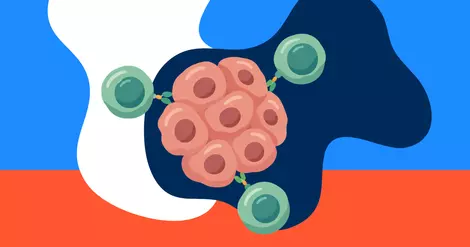
This type of treatment uses your own immune cells to fight the cancer. Your T cells are collected, genetically engineered in a lab, and put back into your body to attack myeloma cells. FDA-approved CAR T-cell therapies for myeloma include:
Both target a protein called BCMA that’s found on myeloma cells. They can lead to very deep, long-lasting remissions for some people, even after many prior treatments. However, CAR T-cell therapy can cause serious side effects like cytokine release syndrome (CRS), which is a strong immune reaction with fever, low blood pressure, and multiorgan dysfunction. CAR T-cell therapy can also cause immune effector cell-associated neurotoxicity syndrome (ICANS), which can cause multiple neurological issues, including headache, confusion, difficulty speaking, and coma. Therefore, CAR T-cell therapy is only performed in specialized centers.
Read more about BCMA-targeted immunotherapy for myeloma.
If CAR T-cell therapy isn’t a good fit for you, your doctor may recommend bispecific antibodies. These are immunotherapies that work in a different way. These drugs link your own T cells to the cancer cells to destroy them. They don’t require cell collection or manufacturing time, so treatment can start right away. These treatments can also cause CRS and other side effects, so close monitoring is necessary during the first few doses.
Bispecific antibodies used to treat myeloma include:
Another immunotherapy your doctor may recommend at this stage is belantamab mafodotin-blmf (Blenrep). It’s an antibody-drug conjugate that delivers a targeted chemotherapy directly to myeloma cells by binding to the BCMA protein. This medication has shown benefit in those whose myeloma has returned after several treatments, but it can cause unpleasant eye-related side effects, so regular eye exams are necessary during treatment. Currently, Blenrep is used as part of combination therapies to improve treatment response.
At this phase, your healthcare team will also prioritize symptom control, bone health, and emotional well-being. Supportive care is crucial to help you stay strong enough to keep benefiting from new therapies.
Everyone’s experience with myeloma treatment is different. Your treatment plan depends on:
Doctors now also use genetic and molecular testing to personalize treatment, identifying which therapies are most likely to work for your specific form of myeloma.
It’s also worth considering joining a clinical trial during your treatment journey. Many of today’s most effective therapies were only available in clinical trials just a few years ago.
It’s natural to feel anxious when you hear the word “relapse.” But myeloma treatment has advanced faster in the past 10 years than treatment for any other type of cancer. Many people live well for years after diagnosis, even through multiple relapses.
On MyMyelomaTeam, people share their experiences with myeloma, get advice, and find support from others who understand.
Will you discuss new treatments for myeloma with your hematology or oncology team if you have another relapse? Let others know in the comments below.
Get updates directly to your inbox.


I am allergic to Lenalidomide and Velcade and I am now on Darzalex faspro and dex, with great success, Is anyone else on this regimen?

 Continue with Facebook
Continue with Email
Continue with Facebook
Continue with Email
Continue with Facebook
Continue with Email
Continue with Facebook
Continue with Email
Become a member to get even more





 Join
Join



 Your Privacy Choices

This is a member-feature!
Sign up for free to view article comments.
I was a bit saddened to read the comment from Mike851, saying he had decided not to go for treatment due to reduced quality of life while under treatment. I would beg him to reconsider, as myeloma… read more
We'd love to hear from you! Please share your name and email to post and read comments.
You'll also get the latest articles directly to your inbox.