
Powered By



Occasionally, hematologists recommend an allogeneic stem cell transplant (a transplant using blood-forming stem cells from a donor) as a treatment for multiple myeloma. It isn’t a common myeloma treatment, but it may be used under specific circumstances.
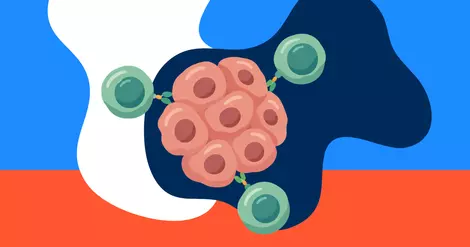
If your cancer specialist has recommended a donor stem cell transplant, it’s important to understand a possible side effect called graft-versus-host disease (GVHD). GVHD happens when immune cells from the donor recognize the recipient’s body as foreign and attack healthy tissues.
GVHD can range from mild to severe and may sometimes become life-threatening. However, in some cases, the donor immune cells may also attack myeloma cells, which can help lower the risk of relapse (cancer coming back).
In this article, we’ll provide an overview of GVHD after an allogeneic stem cell transplant for multiple myeloma.
Allogeneic stem cell transplants replace the stem cells in your bone marrow with healthy stem cells from a donor. Before the transplant, you and a possible donor are tested to see whether your cells are compatible (well matched).
Doctors test proteins on the surface of cells called human leukocyte antigens (HLAs). HLAs help the immune system tell the difference between the body’s own cells and foreign cells. Everyone has a unique HLA pattern, except identical twins. However, some people’s HLA patterns are more closely matched than others.
The goal of an allogeneic stem cell transplant for multiple myeloma is for the donor stem cells to help the body produce new, healthy blood cells. These cells can replace blood-forming cells damaged or destroyed by cancer treatments such as chemotherapy and help rebuild the immune system.
In some cases, allogeneic stem cell transplants may lead to long-term remission (little to no signs of active cancer). However, they are not usually recommended as a first-line treatment because other therapies are generally safer and more effective for most people.
Hematologists may consider allogeneic stem cell transplants in rare situations, such as during clinical trials for younger people with relapsed or refractory high-risk myeloma (myeloma that has come back or stopped responding to treatment).
Graft-versus-host disease can develop when donor stem cells recognize your own cells as a threat and attack them. This reaction can happen when the donor cells detect unfamiliar HLA patterns on the surface of the recipient’s cells. That’s why finding a donor with the closest possible HLA match is important.
There are two main types of GVHD: acute and chronic. Each type tends to affect different organs and tissues. Healthcare providers can tell which type a person has based on their signs and symptoms.

People who receive an allogeneic stem cell transplant can develop either type of GVHD — and sometimes both.
Acute GVHD usually develops within the first 100 days after a stem cell transplant, although symptoms can show up later. It usually affects the liver, skin, or gastrointestinal (GI) tract.
Between 30 percent and 70 percent of allogeneic stem cell transplant recipients may develop acute GVHD.
Chronic GVHD may develop any time after an allogeneic stem cell transplant, but it most often appears within two years of the transplant. It can affect many parts of your body, including your GI tract (including your mouth), liver, skin, lungs, muscles, and joints.
Around 40 percent to 50 percent of allogeneic stem cell transplant recipients develop chronic GVHD.
Some symptoms can overlap between acute and chronic GVHD. For example, both types may cause diarrhea or nausea when the GI tract is affected. However, each type can also cause different symptoms.
GVHD symptoms can range from mild to severe. In more serious cases, hospital treatment may be needed.
Acute GVHD may not always cause noticeable symptoms, depending on which organs are affected. For example, if it affects the liver, healthcare providers may first notice signs through abnormal blood test results.
In other cases, symptoms are easier to recognize. Contact your transplant team right away if you experience any of the following after a donor stem cell transplant:
Symptoms of chronic GVHD can affect many parts of the body. Depending on which areas are involved, symptoms may include:
The biggest risk factor for GVHD is receiving donor stem cells from someone whose HLA patterns aren’t closely matched to the recipient’s. The risk may also be higher when stem cells come from an unrelated donor, even if the donor appears to be a close match.
Other GVHD risk factors include:
A person who has had acute GVHD has a higher chance of later developing chronic GVHD.
GVHD may not always be preventable, but there are steps you and your transplant team can take to lower the risk. Before the transplant, the care team works to find the closest possible donor match.
After your transplant, your care team will prescribe immunosuppressants (drugs that reduce immune system activity) to help lower the chance of GVHD and help the donor cells adjust to their new environment in the body.
Immunosuppressants used before and after allogeneic stem cell transplants can vary depending on several factors. Your transplant team can explain which drug or combination of drugs is recommended for you.
Researchers continue to study new strategies to help prevent GVHD. Clinical trials help researchers test new immunosuppressants and other prevention strategies.
GVHD can often be managed successfully with treatment. GVHD symptoms may improve or go away as the body adjusts to the donor cells from an allogeneic stem cell transplant.
If immunosuppressants don’t prevent GVHD, doctors may prescribe additional treatments.
If acute GVHD develops, the transplant team may increase immunosuppressant therapy. These medications may be given by mouth or through an intravenous (IV) infusion.
For chronic GVHD, healthcare providers may prescribe long-term immunosuppressant therapy to help control symptoms.
Doctors may prescribe corticosteroids to help manage GVHD symptoms affecting different parts of the body. For example, topical corticosteroids may be applied to the skin to treat GVHD-related rashes, and corticosteroid eye drops may help reduce symptoms such as itchy or burning eyes.
For chronic GVHD, your care team might prescribe systemic (whole-body) steroids. Systemic steroids are often a first-line treatment for chronic GVHD because they can address symptoms affecting multiple parts of your body.
Several medications may be prescribed to treat acute or chronic GVHD when immunosuppressants don’t improve the condition. Examples include:
Researchers continue to study new ways to treat and prevent GVHD through clinical trials. These studies test new treatments and treatment combinations to learn whether they may work more safely and effectively than current therapies, including steroids and immunosuppressants.
Your care team can help determine whether you may qualify for a clinical trial based on your GVHD diagnosis, treatment history, and other eligibility criteria.
On MyMyelomaTeam, people share their experiences with myeloma, get advice, and find support from others who understand.
What was your experience like with GVHD after a donor stem cell transplant? Let others know in the comments below.
Get updates directly to your inbox.




 Continue with Facebook
Continue with Email
Continue with Facebook
Continue with Email
Continue with Facebook
Continue with Email
Continue with Facebook
Continue with Email
Become a member to get even more





 Join
Join



 Your Privacy Choices

This is a member-feature!
Sign up for free to view article comments.
Yet, another substandard article from My Myeloma Team. While so many advancements are being made in myeloma treatment, MMT has an article on an old fashioned treatment that is nearly never used, at… read more
We'd love to hear from you! Please share your name and email to post and read comments.
You'll also get the latest articles directly to your inbox.